
Bone Age at 18 Months: Boy and Girl Hand X-Ray Reference
These reference radiographs show the typical appearance of the hand and wrist of a 18 month old boy and a 18 month old girl for bone age assessment. In the toddler period the hand radiograph gains detail rapidly. Epiphyses of the phalanges and metacarpals ossify in a predictable order, and the distal radial epiphysis becomes established. Girls stay consistently ahead of boys, often by a few months of skeletal age.
18 month old boy hand x-ray
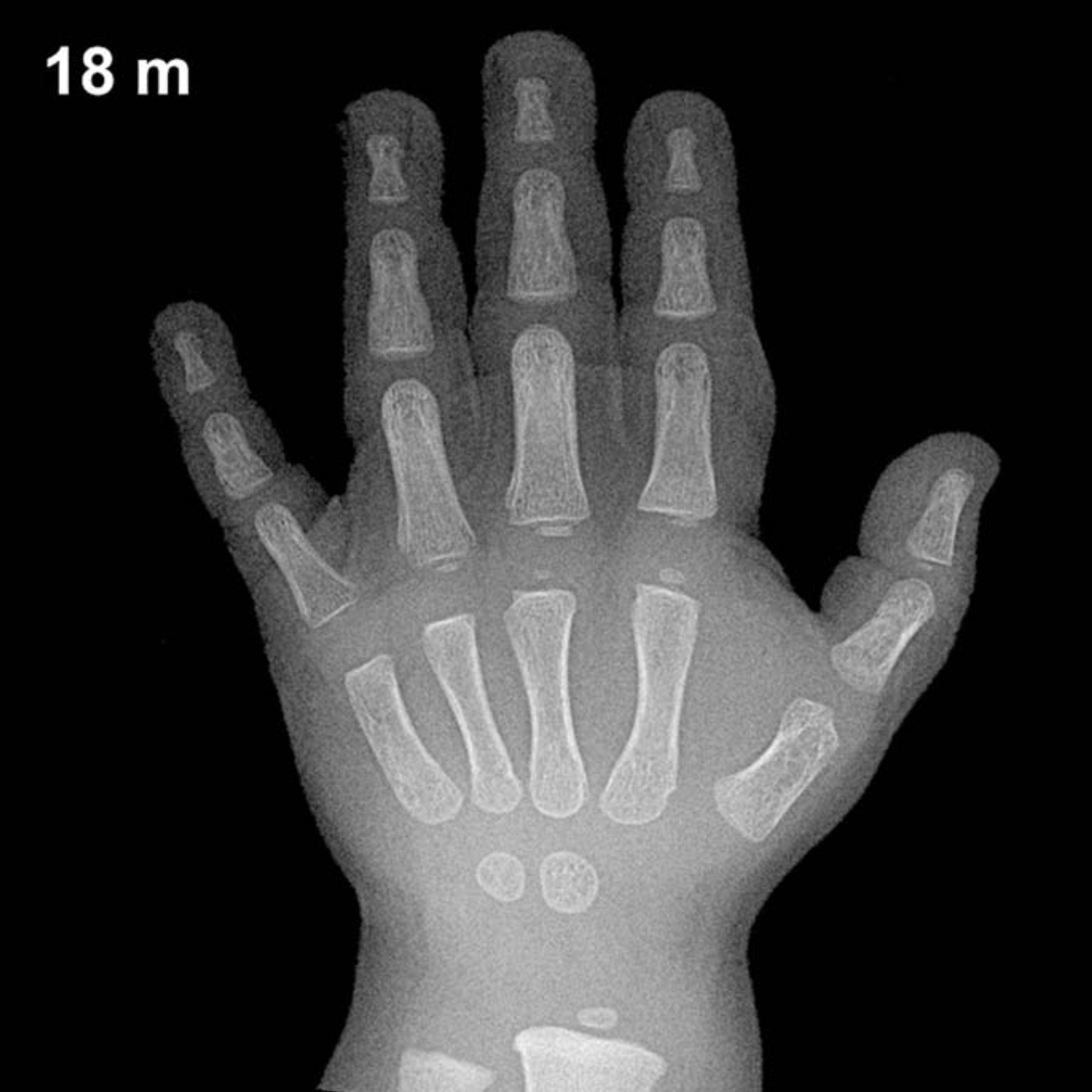
In boys the distal radial epiphysis is now visible and growing, while the epiphyses of the proximal phalanges appear first, followed by the metacarpals and the middle and distal phalanges. The triquetrum usually ossifies later in boys, closer to the third birthday.
18 month old girl hand x-ray
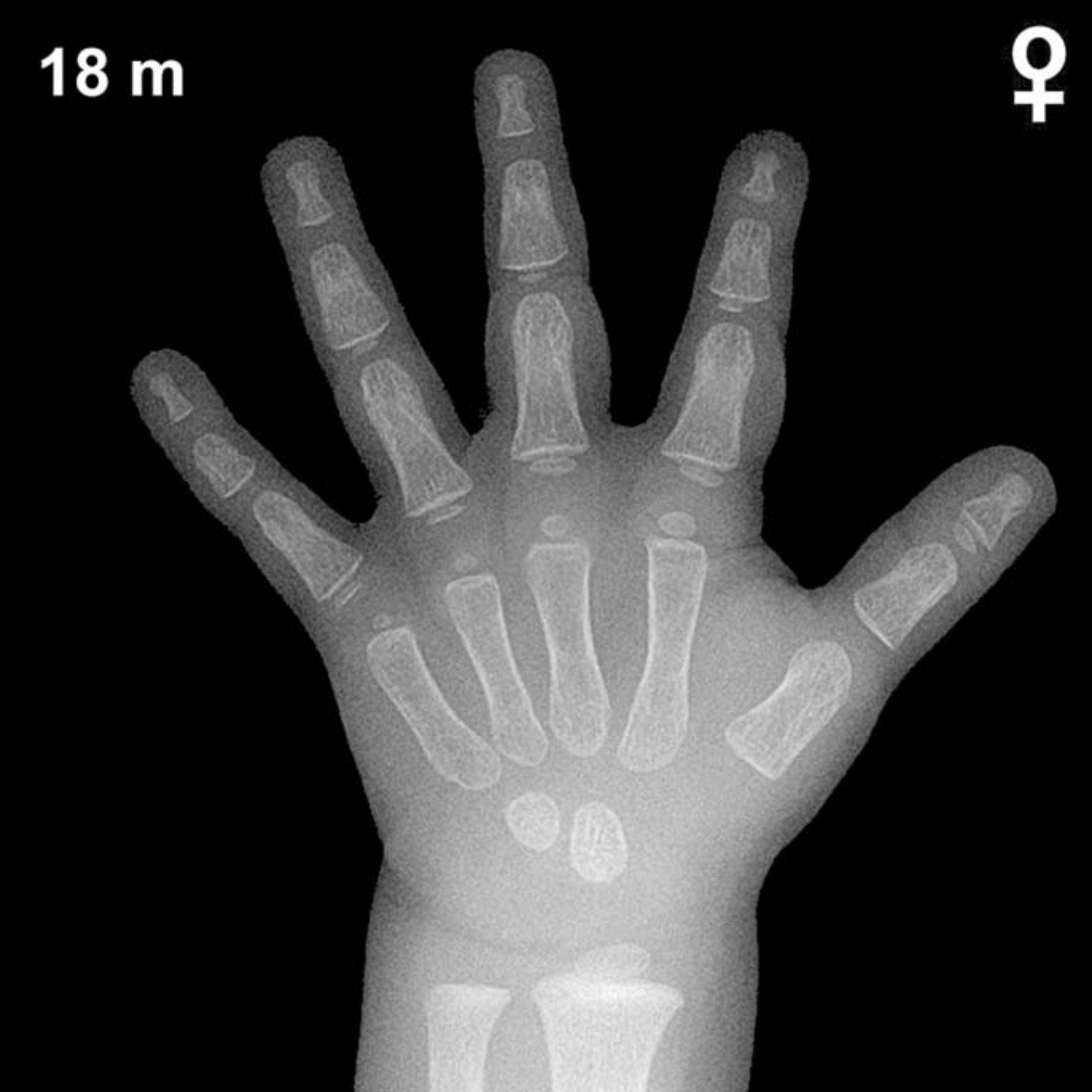
In girls most phalangeal and metacarpal epiphyses appear earlier than in boys. The triquetrum often becomes visible around the second birthday in girls, and the distal radial epiphysis is clearly established and enlarging.
What to look for at 18 months
- Distal radial epiphysis is established and enlarging
- Phalangeal epiphyses appear in sequence: proximal, then middle and distal
- Metacarpal epiphyses ossify during this period
- Triquetrum appears around 2 years in girls and closer to 3 years in boys
How to use these reference images
Obtain a PA radiograph of the left hand and wrist and compare it side by side with the reference image for the matching sex. If the patient's radiograph looks more mature, move to an older reference; if it looks less mature, move to a younger one. The best match gives the estimated bone age, which you can then combine with chronological age and current height to predict adult height.
Neighbouring ages: Bone Age at 16 Months and Bone Age at 20 Months. Browse every age point in the complete bone age atlas by age.